

Why choose us
Benefits of Inlays
Conservative Tooth Repair
An inlay fits within the grooves of your tooth, so we can preserve more of your natural structure than a crown requires.
Custom-Made Fit
Each inlay is shaped to match your specific tooth for a precise, comfortable restoration.
Natural-Looking Results
We design your inlay to blend with your smile so your repair stays discreet.
Coordinated Care
Our team provides general, cosmetic, and restorative dentistry in one office, so your inlay fits into your complete care plan.
Flexible Payment Options
We accept all major PPO insurance plans and welcome self-pay patients.
You bite into something crunchy and feel a twinge in a back molar. At your next visit, we find that an old filling has started to break down, or that decay has spread into the grooves between the cusps of the tooth. The damage is too large for a simple filling to handle well, but most of the tooth is still strong and healthy. For situations like this, we often recommend an inlay, a custom-made restoration that fills the damaged area while preserving as much of your natural tooth as possible.
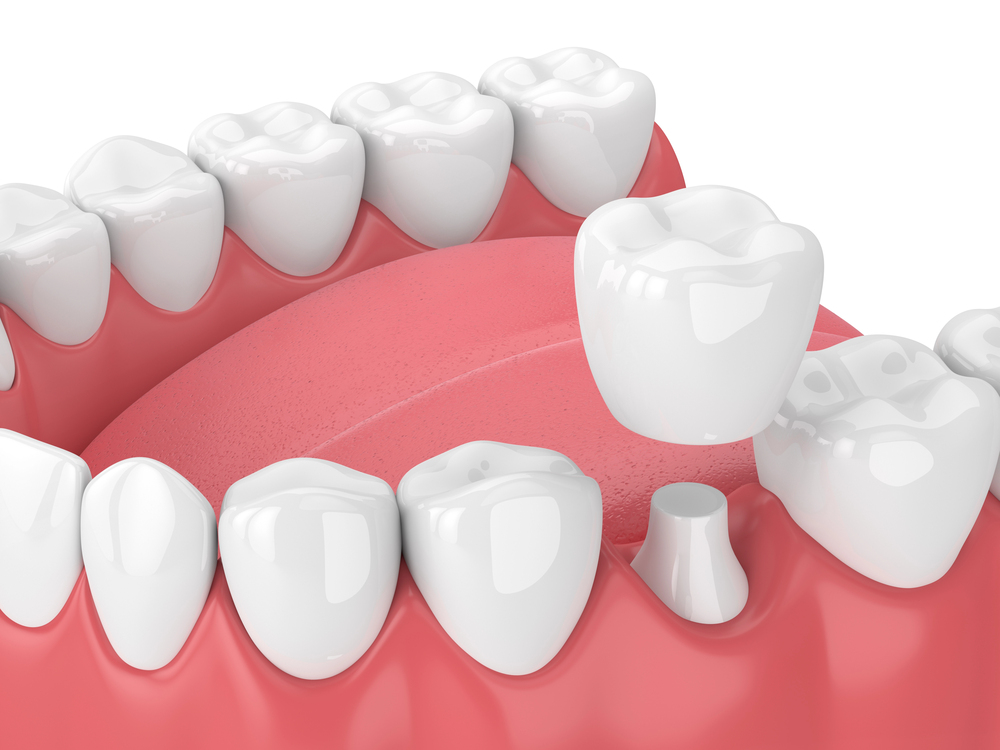
An inlay is a restoration designed to fit precisely within the center of a tooth's chewing surface, between the raised points known as cusps. Unlike a standard filling, which is placed and shaped directly in the mouth, an inlay is fabricated to match the exact contours of the prepared area and is then bonded into place. The result is a snug, durable fit that restores the tooth's shape and function. Inlays are part of the broader restorative dentistry we provide at Family Dental Care, alongside fillings, onlays, and crowns.
Inlays are a good fit for patients whose damage falls in the middle ground between a small cavity and a badly broken tooth. That might be a molar with moderate decay, a premolar with an aging filling that needs replacing, or a tooth where a large filling would leave the surrounding structure weaker than we would like. Because we see patients ages eight and up, we evaluate each case individually, with attention to how the tooth is used and how much healthy structure remains.
Not every damaged tooth is right for an inlay, and part of our job is helping you understand where your tooth falls on the spectrum of options. If the decay or fracture extends onto one or more cusps, an onlay may be more appropriate, since it covers those raised points as well. If the tooth is extensively broken down, a crown that covers the entire visible tooth may give it the protection it needs. If the problem is small, a conventional filling may be all that is necessary.
Before recommending treatment, we perform a thorough dental exam and use cavity detection to assess the extent of the damage. We also look at the health of your gums and the surrounding teeth, because a restoration works best on a stable foundation. If we find other concerns, such as signs of gum disease, we will talk with you about addressing them as part of your overall plan. Our team is led by Michael C. Westcott, DDS, and Sujay Trivedi, DMD, and both take the time to explain why we are recommending one restoration over another.
How Inlays Compare to Other Restorations
Patients often ask why they would choose an inlay over a filling. The main difference is how the restoration is made. A direct filling is shaped in your mouth, while an inlay is crafted to fit the prepared space and then bonded into place. This approach can be especially useful for larger areas of damage where a well-fitted, durable restoration matters.
Compared with a crown, an inlay is more conservative. A crown typically requires reshaping the entire outer surface of the tooth, while an inlay replaces only the damaged portion. When we can preserve more of your natural tooth, we generally prefer to. Some of the reasons patients and our team favor inlays in the right situations include:
- They conserve more healthy tooth structure than a full crown
- They are custom-fitted to the specific shape of the damaged area
- They restore chewing function on back teeth that handle heavy biting forces
- They can replace older, worn-out fillings that have started to fail
Caring for Your Inlay Afterward
Once your inlay is in place, caring for it looks a lot like caring for the rest of your teeth. Brush twice a day, clean between your teeth daily, and pay attention to the margins where the restoration meets the natural tooth, since that is where plaque tends to collect. Some patients notice mild sensitivity in the days after treatment, and we are happy to talk through anything that feels unusual.
Regular dental cleanings and exams help us keep an eye on your inlay and the tooth around it. If you grind or clench your teeth at night, let us know. We offer night mouth guards, which can help protect both your natural teeth and your restorations from excess pressure. If you ever experience sudden pain or damage, we also offer emergency dental appointments.
Insurance and Payment Options
We accept all major PPO insurance plans, and we are glad to help you understand how your coverage may apply to an inlay. Because benefits vary from plan to plan, we encourage you to bring your insurance information to your visit so we can review it with you before treatment begins.
We also welcome self-pay patients. If you do not have dental insurance, we will go over your treatment plan and costs clearly ahead of time, so you can make an informed decision without surprises.
Schedule a Visit With Our Team
If a back tooth has been bothering you, or you have an older filling you are wondering about, we would be glad to take a look. Our team in West Palm Beach welcomes patients from Palm Beach, Palm Beach Gardens, and the surrounding communities. Reach out to Family Dental Care to schedule an appointment, and we will help you find the restoration that makes the most sense for your smile.
The process
What to expect
- 1
Exam and Consultation
We examine your tooth and talk with you about whether an inlay is the right way to restore it.
- 2
Preparing Your Inlay
We remove the damaged area and carefully fit and bond your custom inlay into place.
- 3
Ongoing Aftercare
Regular cleanings and exams with our team help keep your inlay and natural teeth healthy.