
Services
Bridges
We replace missing teeth with custom bridges, including implant-supported options, to restore your smile and comfortable chewing.

Why choose us
Benefits of Bridges
Fill the Gap
A bridge replaces one or more missing teeth so your smile looks complete again.
Chew and Speak Comfortably
Restoring missing teeth helps make everyday eating and talking feel natural.
Keep Teeth Aligned
Filling the space helps keep neighboring teeth from drifting out of place.
Implant-Supported Options
We also provide fixed bridges anchored by dental implants when that suits your needs.
Flexible Payment Choices
We accept all major PPO insurance plans and welcome self-pay patients.
When a single back tooth is missing, the teeth on either side often begin to drift into the gap, and the tooth above or below can slowly lengthen toward the empty space. A dental bridge fills that gap by anchoring a replacement tooth to the healthy structures beside it. At Family Dental Care in West Palm Beach, we use bridges to help patients chew comfortably, speak clearly, and keep their bite stable after tooth loss.
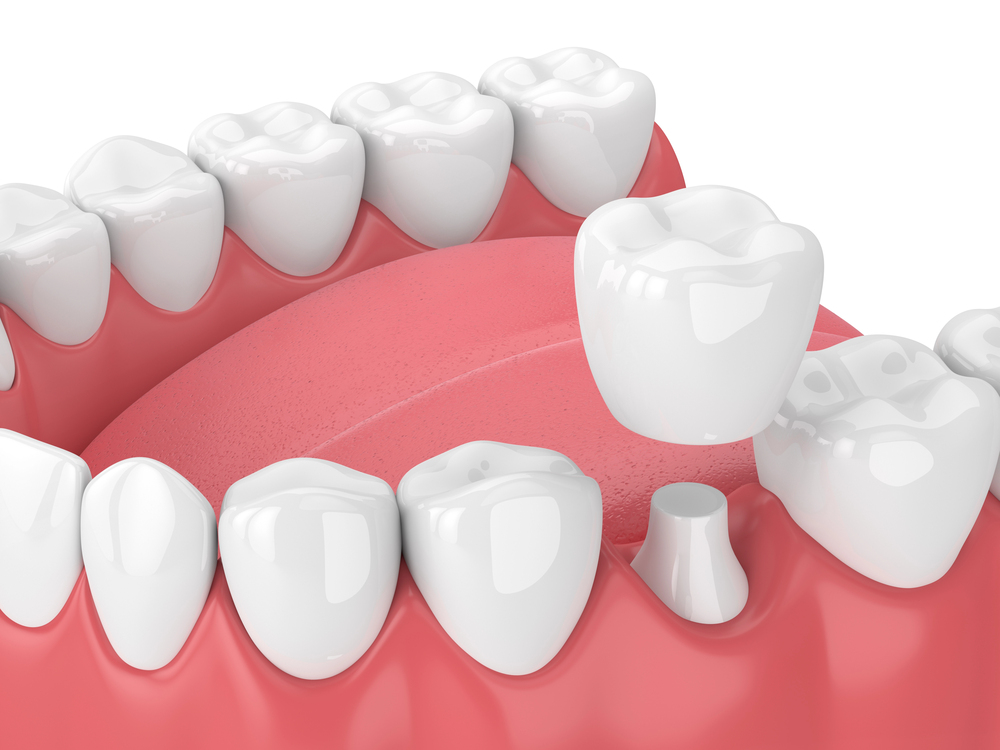
A traditional bridge is a single fixed restoration made of three or more connected parts. The replacement tooth in the middle is called a pontic. It is held in place by crowns on the neighboring teeth, which are called abutments. Because the bridge is cemented in place, you don't take it out at night or clean it in a cup the way you would a removable appliance. It stays put and works like part of your natural smile.
Bridges are a good fit for a wide range of situations. A patient might lose a molar after a cracked tooth can't be saved. Another might have a front tooth removed after an injury. Someone else might have lived with a gap for years and now notices food packing into the space or the neighboring teeth tipping. For people missing several teeth in a row, we also offer implant-supported bridges, which rest on dental implants instead of natural teeth.
A strong candidate for a traditional bridge has healthy teeth on both sides of the gap that can support crowns. Those teeth need to be reshaped to make room for the crowns, so we look carefully at their condition first. If an anchoring tooth has a large old filling or already needs a crown, a bridge can restore it while replacing the missing tooth at the same time. If the neighboring teeth are untouched and healthy, we may talk with you about whether an implant would preserve more natural tooth structure.
Gum health matters too. If we find signs of gum disease during your exam, we can treat it first with scaling and root planing or other gum disease care. That gives your new bridge a stable foundation. Our team handles general, restorative, and periodontic care, so these steps can often happen in one familiar office. We plan treatment around your mouth as a whole rather than looking at the gap alone.
Comparing Your Tooth Replacement Options
A bridge is one of several ways we replace missing teeth, and part of our job is helping you weigh them honestly. Depending on your needs, we may discuss:
- Traditional bridges, anchored by crowns on the neighboring natural teeth
- Single dental implants, which replace a tooth without involving the teeth beside it
- Implant-supported bridges, for several missing teeth in a row
- Partial dentures, a removable option for gaps in different areas of the mouth
Each choice involves trade-offs in treatment time, how many visits it takes, and how it affects nearby teeth. An implant may also call for bone grafting if the jawbone has thinned after tooth loss. A bridge usually avoids surgery entirely. We'll walk through what each option means for your mouth so you can make a confident decision.
Caring for Your Bridge Day to Day
A bridge needs daily care, with a little extra attention underneath the pontic. Plaque and food can collect where the replacement tooth meets the gums. Our hygienists will show you how to clean that area, using tools such as floss threaders or small interdental brushes. Brushing twice a day and cleaning under the bridge daily helps protect the anchoring teeth from decay and keeps your gums healthy.
Regular cleanings and exams let us check the bridge, the crowns, and the supporting teeth over time. If you grind your teeth at night, we may recommend a night guard to protect your restoration. And if a bridge ever feels loose or damaged, call us. We offer emergency dental appointments and can see you promptly.
Insurance and Payment for Bridges
We accept all major PPO insurance plans, and many plans include some coverage for restorative care such as bridges. Our team can help you understand your benefits before treatment begins. We also welcome self-pay patients and will talk through costs with you up front.
Schedule Your Bridge Consultation
Whether you've recently lost a tooth or have been living with a gap for a while, we're glad to help. Dr. Michael Westcott and Dr. Sujay Trivedi care for patients ages eight and up from West Palm Beach, Palm Beach, and Palm Beach Gardens. Call our office to book a visit. We'll examine your smile, answer your questions, and help you choose the tooth replacement option that fits you best.
The process
What to expect
- 1
Exam and Planning
We examine your teeth and gums and talk through the bridge options that fit your smile.
- 2
Preparing Your Bridge
Our team prepares the supporting teeth or implants and fits your custom bridge.
- 3
Ongoing Care
Regular cleanings and exams with our hygienist help keep your bridge and gums healthy.